Productivity guide
The Ivy Lee Method: A Simple Daily Productivity System
A 100-year-old routine for getting the important things done — six tasks, ranked, one at a time.
In 1918, productivity consultant Ivy Lee gave the president of Bethlehem Steel a deceptively simple daily routine. Charles Schwab reportedly paid him $25,000 (over $400,000 today) for it. A century later, the Ivy Lee Method is still one of the cleanest ways to end decision fatigue and actually finish what matters.
No apps required. No color-coded matrices. Just a piece of paper, six lines, and one rule.
The Ivy Lee Method in 5 steps
- At the end of each workday, write down the six most important things you need to do tomorrow. No more than six.
- Rank them in order of true importance.
- Tomorrow, start with task #1. Work only on that task until it's finished before moving on.
- Do the same for the rest of the list. Any unfinished tasks roll over to tomorrow's six.
- Repeat every working day.
Why it works
Most productivity systems fail because they add complexity to an already complex day. The Ivy Lee Method removes complexity:
- It forces prioritization. Only six slots means you have to choose.
- It kills task-switching. One task at a time, start to finish.
- It ends the day cleanly. Writing tomorrow's list tonight lets you stop thinking about work.
- It compounds. Six meaningful tasks a day is 30 a week — more than most people finish.
Common mistakes to avoid
- Writing more than six tasks. The whole point is the constraint. If it doesn't make the list, it doesn't get done today.
- Ranking by urgency instead of importance. Urgent-but-unimportant work will always find you. Rank by what actually matters.
- Jumping to task #3 because it's easier. If you can't focus on #1, break it into a smaller version — don't skip it.
- Writing the list in the morning. Write it the night before so tomorrow starts with momentum, not planning.
Ivy Lee vs. modern productivity systems
Compared to systems like GTD or the Eisenhower Matrix, the Ivy Lee Method has almost no overhead. There's no inbox, no context tags, no weekly review. It's built for people who want to do the work, not manage a to-do system.
That simplicity is also its limit: if your job involves hundreds of small tasks, use Ivy Lee for the six that matter and manage the rest separately.
Ivy Lee Method + Tally
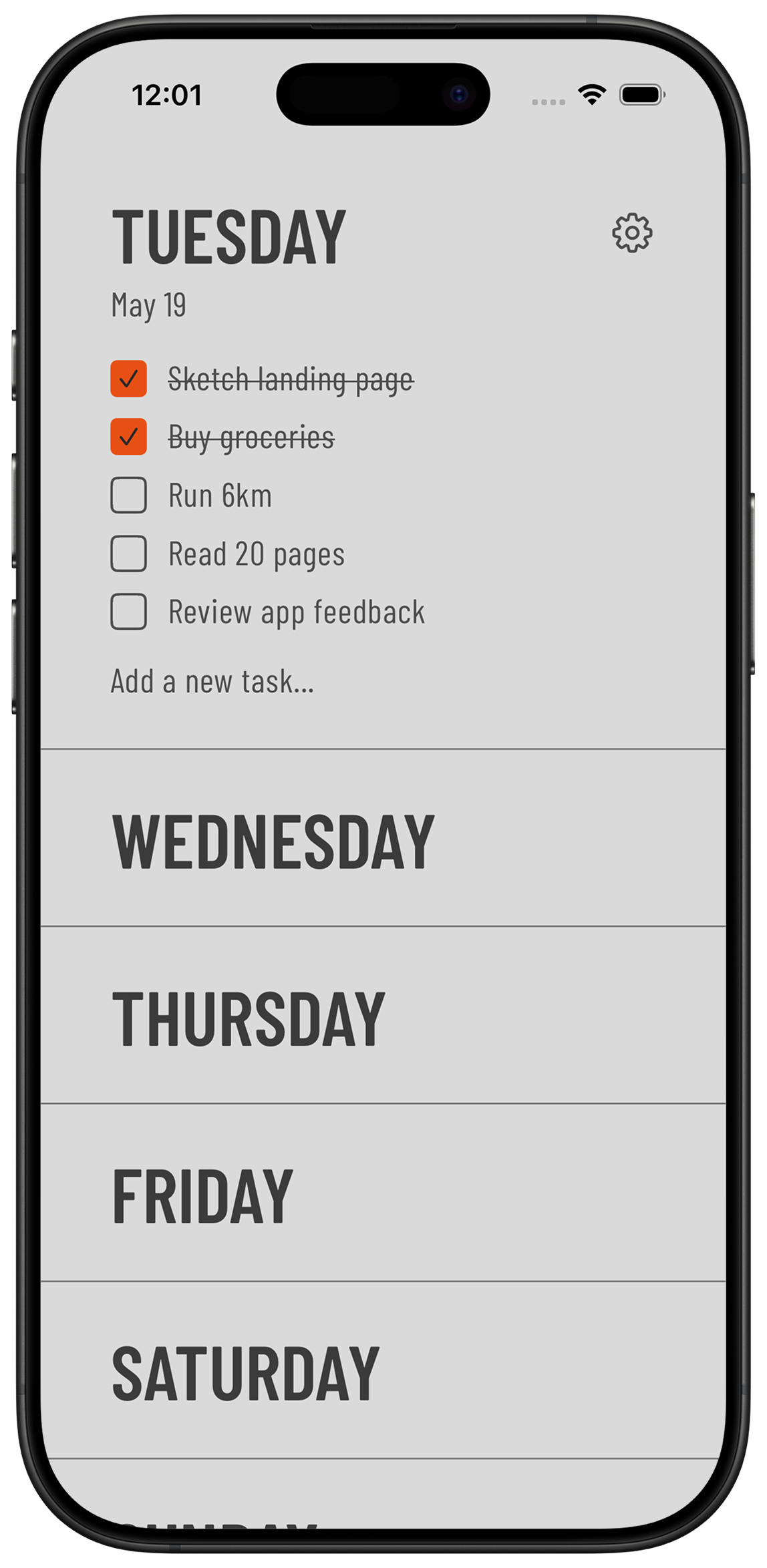
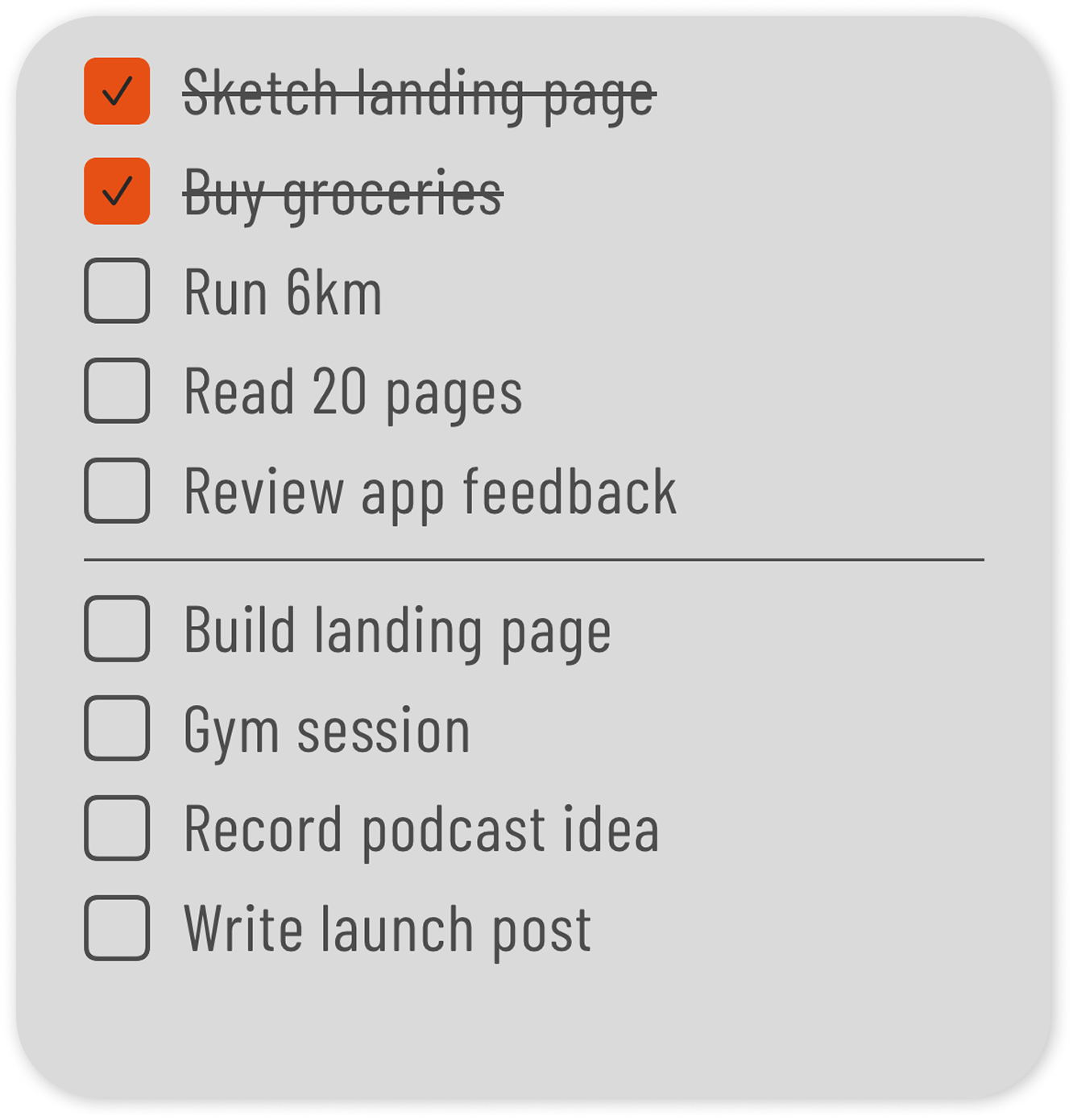
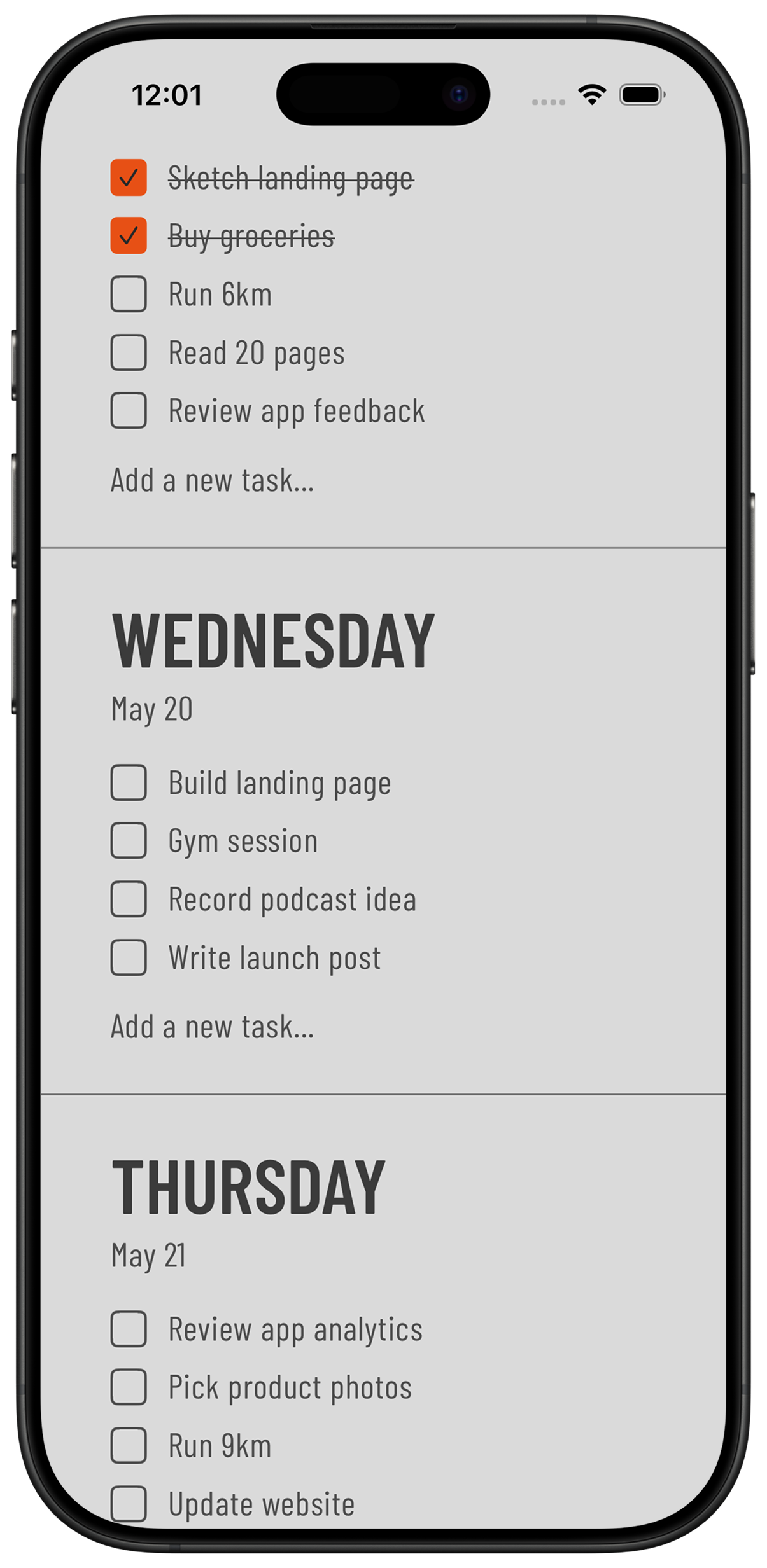
Tally is built for exactly this kind of workflow. Each day is a clean list — no projects, no tags, no clutter. Add tomorrow's six tasks tonight, tap them in order, done.
The Home Screen widget puts your six tasks right where you'll see them, so the first thing you open your phone to is the top of the list — not a feed.

Frequently asked
Why exactly six tasks in the Ivy Lee Method?
Six is small enough to force real prioritization, large enough to be a full day of meaningful work. It's the number Ivy Lee originally recommended in 1918.
Can I combine Ivy Lee with time-blocking?
Yes. Rank your six tasks, then block time for the first two or three on your calendar. Ivy Lee decides what; time-blocking decides when.
What if I don't finish all six tasks?
Move unfinished items to tomorrow's list — but re-rank them. If a task keeps rolling over, it's usually too big and needs to be broken down.